


When Russia invaded Ukraine in February 2022, the Russian leadership expected a swift operation against a Ukrainian state assumed to be politically and psychologically fragile. That assumption proved fatally wrong. The reality Russian forces encountered in Ukraine bore little resemblance to the picture held in the Kremlin. How could a state with a long tradition of studying how to manipulate an adversary’s decision-making itself make one of its most important strategic decisions on the basis of a distorted picture of reality? Who, in the end, had deceived whom?
The Art of Shaping an Adversary’s Decisions
The ability to deceive the enemy through camouflage and concealment, among other means—maskirovka—has a long tradition in Russian and Soviet military doctrine. Another key concept in Russian military theory dating back to the Soviet era is reflexive control (refleksivnoe upravlenie). Reflexive control means attempting to shape an adversary’s decision-making by influencing his perception of reality.
The distinction between refleksivnoe upravlenie and maskirovka is important. Reflexive control goes a step beyond traditional military deception. It is not merely about concealing one’s own intentions or getting an adversary to believe a lie. The aim is to influence the information and assumptions on which his decisions are based, so that he himself chooses to act in a way that benefits the party seeking to influence him. The decision is still experienced as his own.
A simple military example would be to make an adversary believe that an attack will take place somewhere other than its actual location. If the deception succeeds, there is no need to force him to redeploy his forces. He does so himself, because it appears to be the rational decision based on the picture of reality he has been given.
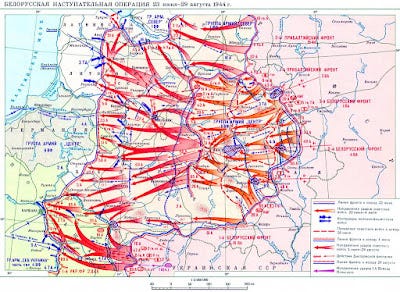
During Operation Bagration, the codename for the Red Army’s great offensive in the summer of 1944, maskirovka saw one of its most successful applications. While the Soviet Union secretly concentrated enormous forces against the German Army Group Centre in Belarus, it reinforced the Germans’ belief that the main Soviet offensive of the summer would come farther south. Large armoured forces remained in Ukraine, while the actual build-up in Belarus was carefully concealed. As a result, the German leadership kept a large proportion of its mobile reserves in the south when the main Soviet offensive was launched against Army Group Centre.
From Maskirovka to Reflexive Control
Concealing the actual build-up of forces was maskirovka. But the purpose was not merely to hide Soviet intentions. By simultaneously reinforcing the picture of reality the Germans already held, the Soviet Union sought to induce the German leadership to deploy its forces in a way that benefited the Soviet offensive. Here we approach the logic that would later be formalised as reflexive control.
It is this indirect form of control that makes the concept of reflexive control particularly interesting. Rather than controlling an adversary’s actions, the aim is to control the conditions on the basis of which he chooses his actions.
To understand why this idea came to occupy such a prominent place in Soviet military thought, we need to go back to the breakthrough of cybernetics in the 1950s and 1960s. At its core, cybernetics is concerned with control through information and feedback.
In the Soviet Union, these ideas also came to be applied to military problems. If an adversary’s decisions could be understood as the result of the information available to him, this opened up the possibility of influencing his actions by manipulating the very information on which his decisions were based. Reflexive control, theoretically developed during the 1960s by the Soviet mathematician and psychologist Vladimir Lefebvre, became a way of describing precisely this possibility.
Shaping Perceptions Through Threats
During the war in Ukraine, Russia’s influence operations against both Ukraine and the West can in several respects be understood in terms of reflexive control. Since 2022, Russia has repeatedly signalled that certain forms of Western support could cross Russian “red lines” and lead to serious escalation, ultimately including the use of nuclear weapons. The effect was not that the West accepted Russia’s account of the war. On the contrary, support for Ukraine continued. But concerns about escalation affected how, when, and under what restrictions that support was provided.
Russia did not need to convince the Biden administration that Russia was in the right. It was enough to influence its assessment of the consequences of different courses of action. Russian threats and signals thus helped shape the perception of risk within which Western decisions were made.
Under the Trump administration, several Russian narratives, including those concerning the causes of the war, have resurfaced in the American political debate and also in the administration’s own descriptions of the conflict. At the same time, Russia has continued to employ more sophisticated forms of hybrid influence against Europe. One possible function of these operations has been to reinforce perceptions of threat that encourage European countries to prioritise their own security over support for Ukraine.
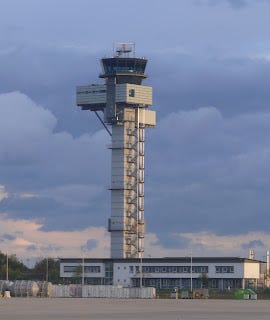
An explosives-laden drone at Leipzig Airport may have been intended to detonate and thereby directly disrupt shipments to Ukraine. But it may also have been intended to be discovered, or to serve several purposes at once. If the aim was to reinforce German perceptions of a growing Russian hybrid threat and thereby influence German security priorities, we approach the logic of reflexive control. The problem is that this is exceedingly difficult to establish. Yet uncertainty about the perpetrator, the intention, and what might come next is itself part of the political effect of hybrid operations.
When reflexive control works well, the recipient does not necessarily perceive a Russian message at all. He sees a situation, makes his own assessment of the risks, and reaches what he perceives as his own rational decision. Only afterwards, if ever, does it become clear that the decision-making process has been manipulated.
When Feedback Becomes Corrupted
But reflexive control requires more than the ability to manipulate the information that reaches an adversary. A system that seeks to shape its external environment through information also depends on the information flowing back to its own leadership corresponding to reality. Here, a fundamental weakness was already present in the Soviet system.
In the Soviet planned economy, subordinates were rewarded for meeting the targets set by their superiors. When reality failed to conform to the plans, there were therefore strong incentives to adjust the reports to the plans rather than the plans to reality. The phenomenon even had a name: pripiski, roughly meaning “additions” or “padding”—adding things on paper that did not actually exist by inflating production figures and reporting results that had never been achieved.
One of the most spectacular examples was the Uzbek cotton scandal, which was exposed during the 1980s. Year after year, the Soviet Republic of Uzbekistan was expected to supply ever larger quantities of cotton to the Soviet economy. As production targets became increasingly difficult to meet, the reported harvest began to diverge from the actual one. Cotton that had never been grown or harvested existed on paper, while money and rewards for the fictitious production were distributed through an extensive network of corruption.
Because the Soviet planned economy depended on reported production figures, pripiski had consequences far beyond the individual factory or collective farm. If production that did not exist was nevertheless reported as real, the next stage of planning could be based on false premises. Fictitious results on paper could thus contribute to real shortages of raw materials, goods, and resources further down the system.
The fraud therefore amounted to more than ordinary theft. It distorted the feedback mechanism of the system itself. As information moved upward through the Soviet hierarchy, it tended to become increasingly similar to the reality that superiors expected to see reported. In the end, the leadership made decisions based on a picture of the economy that the system itself had produced. In cybernetic terms, the feedback had become corrupted.
What was remarkable was that the system did not require everyone to believe the figures. Many knew that the reports had been manipulated. But every level of the hierarchy had reasons to pass the embellished picture upward. A system in which many individual actors knew the information to be false could therefore still produce a false picture of reality for the highest levels of leadership.
The Army on Paper
The Soviet Union dissolved, but the incentive to report upward what one’s superiors wanted to hear did not disappear. The same mechanism would emerge much later within the Russian armed forces. Units could be fully manned on paper but not in reality, equipment could be recorded as present while actually missing, and readiness could be reported as higher than it really was. In cybernetic terms, the opportunity for corruption functions as a reward mechanism for loyalty, while corruption simultaneously distorts the information signal flowing upward.
When the Russian army entered Ukraine in February 2022, the gap between reported and actual capability suddenly became visible. The real staffing and readiness of units did not always correspond to the strength that the organisation appeared to possess on paper. Vehicles broke down because of inadequate maintenance, supplies of fuel and spare parts functioned poorly, and the Russian army encountered serious logistical problems during the very first weeks of the invasion. Corruption, however, was not the only cause. The operation was poorly planned and encountered considerably stronger Ukrainian resistance than expected. But the gap between the military capability that had been reported and the capability that could actually be deployed had deeper systemic causes.
Corruption is not merely a problem within the system; it is also part of the system itself: the opportunity to appropriate a limited share of public resources functions as a reward for loyalty, while knowledge of that corruption makes subordinates vulnerable should their loyalty cease. Corruption thus helps hold the system together while simultaneously making it dysfunctional. Corruption does not merely produce material deficiencies; it also produces a distorted picture of those deficiencies.

A particularly telling example was the modern encrypted Azart radio system. Large sums had been invested in the system, but its procurement had already become the subject of a major corruption investigation before the invasion. When the war began, Russian units nevertheless experienced serious problems with secure tactical communications and resorted, among other things, to civilian radios. The modern communications capability that the reformed Russian army was supposed to possess therefore did not fully correspond to the capability actually available to its units when they entered Ukraine.
The same dysfunctional pattern later became apparent in much simpler things. Russian military vehicles were observed with tyres in poor condition, long vehicle columns encountered maintenance and supply problems, and fuel shortages contributed to vehicles being left stranded. At the same time, Russian logistics came under intense Ukrainian pressure, and the operation was based on false assumptions about how quickly the war would be decided. But the gap between reported and actual readiness became difficult to explain away.
The problem therefore went beyond money being embezzled or equipment being stolen. If, for example, a radio that is missing is nevertheless recorded as delivered, a unit short of soldiers is reported as fully manned, or equipment that has not been maintained is reported as combat-ready, the information flowing back up through the organisation becomes distorted. On paper, the leadership commands an army that does not entirely exist in reality.
The Distorted Picture of Ukraine
Perhaps the most dangerous gap between what existed on paper and what existed in reality concerned not Russia’s own army, but Ukraine. In the years leading up to the invasion, Russia’s Federal Security Service, the FSB, had steadily expanded its operations in Ukraine. The department responsible for Ukraine grew substantially, officers were assigned to different Ukrainian regions, and networks of agents and potential collaborators were built up. Moscow also maintained close ties with Ukrainian politicians such as Viktor Medvedchuk and former president Viktor Yanukovych. The planning appears to have assumed that the Ukrainian state could be rapidly destabilised and that parts of the political and administrative elite could be persuaded to cooperate with Russia.
When the invasion began, this picture proved gravely misleading. Collaborators and Russian agent networks did exist, but the Ukrainian state did not collapse. The president did not flee, the government continued to function, and large parts of the population instead rallied behind the resistance. The country that the Russian intelligence apparatus had spent years trying to influence turned out to be something very different from the country Russian war planning appears to have anticipated.
In an authoritarian system, there are weak incentives to pass uncomfortable truths upward. The problem becomes particularly serious when the same organisation that has been given resources to build influence is also responsible for reporting how successful that influence has been. Failures then risk being embellished as they move up the hierarchy, while the preconceptions of the highest leadership influence which information is taken seriously.
Exactly how this distorted picture of reality emerged is difficult to establish. The intelligence services may have reported what the political leadership wanted to hear, local agents may have exaggerated their own importance, and Putin himself may have been more receptive to information that confirmed his already established view of Ukraine. Several such mechanisms were probably at work simultaneously.
The Soviet problem had thus returned in a new and considerably more dangerous form. A system that had developed sophisticated methods for manipulating an adversary’s picture of reality had simultaneously created an information environment in which its own leadership’s picture of reality could be manipulated from below. The feedback problem inherent in reflexive control had turned the system against itself.
When the Plan Met Reality
The Russian attack was not doomed to fail simply because the information on which it was based was flawed. The distorted assessment did not make the Russian plan impossible, but it led the Kremlin to take an enormous strategic risk based on false assumptions about the likelihood of success.
Nowhere was the collision between Russian planning and reality more evident than at Antonov Airport in Hostomel. The Russian plan rested on the assumption that Ukrainian resistance could quickly be paralysed and that the country’s leadership would fall or flee. A different course of events at Hostomel during the first hours of the invasion could, however, have had dramatic consequences.

Had the Russian elite troops succeeded in securing the airport and keeping the runway open, the waiting transport aircraft could have brought in another thousand or so airborne troops close to the capital. At the same time, mechanised forces were advancing south from Belarus. Had these forces been able to link up and rapidly push into Kyiv, the Ukrainian government could have faced an entirely different situation during the first days of the war. But the Ukrainian defence of Hostomel prevented Russia from establishing the air bridge on which the Russian plan depended. The transport aircraft that were to bring in the main Russian force were never able to land.
Russia had developed sophisticated methods for influencing the information on which an adversary based its decisions. But the authoritarian system’s own information culture simultaneously distorted the information flowing back to its leadership. The system that had learned to manipulate its adversary’s picture of reality had ultimately manipulated its own. The question was no longer who had deceived whom, but how the system had deceived itself.